About
Scaling Women’s Economic Empowerment through Affirmative Procurement Reforms (SWEEP) is an initiative focused on eliminating bariers that limit women-owned and led businesses (WOLBS) in Nigeria’s procurement sector. Although women entrepreneurs represent 40% of Nigerian businesses, they face substantial challenges in accessing public contracts, constraining their economic impact.
Launched in partnership with the World Bank and the Young Professionals Program (YPP). SWEEP offers a 4-week intensive course in a hybrid format, equipping women entrepreneurs with critical procurement skills for public and private sector contracts.
The program is open to women entrepreneurs from all sectors of the economy in Abuja, Through training, mentorship, and engagement with key stakeholders, SWEEP addresses obstacles like financial access, information gaps, and business formalization.
empowering women-owned and women-led businesses in Abuja to participate competitively in procurement.
Our mission is to foster a more inclusive business environment that supports women entrepreneurs and contributes to Nigeria’s broader development goals, including poverty reduction job.
Testimonials
Oluseyi Kemi Bola Mercy
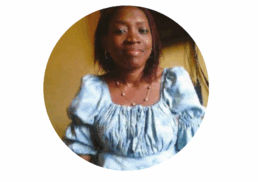
Oluseyi Kemi Bola Mercy is the founder of God’s Backing
Nigeria Ltd. For her, the SWEEP Mentorship Program was
more than just a learning experience.
“It was an eye-opener,” she said, reflecting on her
journey through the program. “I discovered so many
things that used to feel like barriers, and I now feel
more equipped to face them and get great jobs done
successfully.”
One of the most valuable aspects of the mentorship for
Oluseyi was learning the practical side of procurement.
“Procurement practices stood out for me,” she shared.
“Before now, I didn’t know how to bid for contracts, but
the mentorship helped me understand the process step
by step.”
For Oluseyi, this new knowledge has unlocked a sense
of confidence and possibility. The program helped her
confront doubts and uncertainties that once held her
back, and now, she’s ready to take bold steps toward
bigger opportunities in public procurement.
Elizabeth Essiene is the founder of Elibas Peace
International Ltd. For her, the SWEEP Mentorship Program
provided clarity and direction in a space she had long
struggled to navigate.
“It really opened my eyes,” she said, reflecting on the
impact of the mentorship. “I got the information and
guidance I needed on how to get NAFDAC and other
compliance documents.”
For Elizabeth, this was a major breakthrough. “Before
now, I didn’t even know where to start,” she shared. “But
the program broke it down for me, step by step, and I
now feel more confident in getting my business properly
registered and compliant.”
This newfound understanding has given her business a
firmer foundation and empowered her to pursue bigger
opportunities. With the tools and knowledge gained from
the mentorship, Elizabeth is now taking bold steps to
ensure her products meet regulatory standards and can
compete in larger markets.
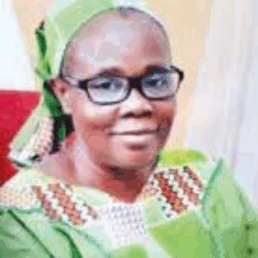
Elizabeth Essiene
Coker Unwana Natasha
Coker Unwana Natasha is the founder of Colezna
Ventures Limited. For her, the SWEEP Mentorship Program
provided invaluable lessons that have reshaped how she
approaches her business operations.
“One of the most valuable parts of the mentorship for me
was learning about contract administration,” she said. “I
now understand the importance of documenting every
agreement, no matter how small.”
For Natasha, this skill was a game-changer. “Before now,
I didn’t always take documentation seriously, but the
mentorship helped me see how critical it is to protect
myself and my business,” she explained.
Reflecting on her experience, Natasha expressed deep
appreciation for her mentor. “Mrs. O.K. Olaosebikan, my
mentor, is a seasoned entrepreneur—very sound in her
approach. I’m grateful to have learned under her,” she
said. “Thank you for the opportunity.”
Now equipped with this knowledge, Natasha is more
confident and prepared to handle contractual dealings
in her business, ensuring everything is done properly
and professionally.

I am text block. Click edit button to change this text. Lorem ipsum dolor sit amet, consectetur adipiscing elit. Ut elit tellus, luctus nec ullamcorMadam Aishatu M. Kyari attested that participating in the
World Bank SWEEP program was an experience for her and
her business. “The program provided me with valuable
knowledge on how to effectively bid for procurement
opportunities. As a result, I have successfully won
procurement contracts,” she shared. Since completing
the bidding tasks with UNDP and UNHCR, Aishatu has been
actively pursuing new contract opportunities. Currently,
she is working on a bid with UNDP for the supply of livelihood
equipment in Kaduna and Katsina states.per mattis, pulvinar dapibus leo.
Additionally, she is preparing another bid in Katsina State
with UNDP for perimeter fencing and the renovation of
hostels at the Police Training Institute in Edo State. Aishatu
M. Kyari is the Managing Director of Asheehay, Home of
Interior Decor and Furniture, a business dedicated to
creating elegant and functional interior solutions. Beyond
the technical skills she gained, Aishatu highlights the power
of the SWEEP community in her journey. “Being part of this
network of women entrepreneurs has been equally impact
ful. Connecting with like-minded individuals who share similar
challenges and aspirations has created a supportive space
for collaboration, mentorship, and knowledge-sharing,” she
added.
Through SWEEP, Aishatu advanced her business and has also
built meaningful relationships that continue to open doors
to new opportunities. Her story is a testament to the power
of capacity-building and networking in empowering women
entrepreneurs.
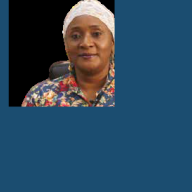
Madam Aishatu M. Kyari
Asheehay, Home of Interior Decor and Furniture
Mission and Vision
To empower Nigerian women entrepreneurs through affirmative procurement reform by providing capacity building, mentorship, stakeholder engagement, and advocacy aimed at reducing systemic barriers to procurement.
Objectives
The broad objectives of SWEEP was to increase the inclusion of women entrepreneurs in public and private sector procurement systems by equipping them through capacity building, specialized training in procurement procedures, financial planning, digital literacy, and business development. The program also aimed to influence institutional practices and policies.
Project Partners
765
Women entrepreneurs trained
1,109
Applications received
928
Women onboarded
82%
Training completion rate
22
Women with disabilities included
89%
Women reporting improved procurement knowledge.
72%
Women gaining access to new opportunities
65%
Women reporting enhanced decision-making
58%
Women reporting improved operational efficiency
40%
Increase in procurement readiness
Explore our Initiatives
The Affirmative Procurement Program in West Africa is focused on improving women’s economic empowerment by enhancing procurement opportunities and building the capacity of women-led businesses.



ADVANCING GENDER-RESPONSIVE REFORMS & PIONEERING CHANGE THROUGH POLICY REFORMS
Working closely with the government, the project has led to integrating gender-responsive principles into regulatory frameworks.
3
Policies promoting GRP
1
Regulation on GRP
TRAINING FOR THE APPLICATION OF SUSTAINABILITY REFORMS
One can have beautiful policies that do not translate into reality because they are not applied. To address this, the project has invested in building the capacity of public officials to implement them.
365
Number of officials trained
114
Institutions equipped with the necessary tools and knowledge to implement gender responsive policies and practices
INVESTING IN PREPAREDNESS
2000 women entrepreneurs have acquired key skills
to get them ready to access markets in both, the public and the private sector. Training topics included procurement processes, digital marketing, and financial inclusion.
2000
WSMES trained on affirmative procurement processes
EXPANDING PROCUREMENT OPPORTUNITIES FOR
WOMEN LED SMES
At least 1695 WSMEs across all four countries have gained access to new procurement opportunities.
1695
Number of women applying to procurement opportunities
$1,300,000
Value of secured procurement contracts for women in the program
611
Number of women registered as vendors on UNGM
237
Number of WEPS signed
601
No of WSMEs have enhanced their business operations to achieve business compliance (that allows them to access public procurement processes)
Watch Testimonial Videos Below
A Compilation of Impact Stories

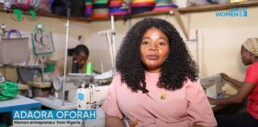
Adaora's Story
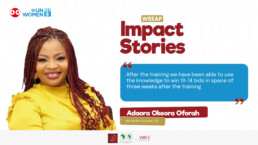
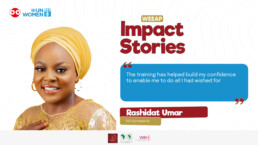
Rashidat's Story
UN Women Documentary